Threshold Stories: Framing Everyday Transitions
 Maya Calder
·
Maya Calder
·
Why thresholds matter
Thresholds are where things change. A door half-open, a pair of shoes by the mat, a hand on a banister — these fragments tell you someone moved from one state to another. Unlike grand scenes that shout for attention, thresholds whisper. They ask the viewer to step closer and imagine what comes next.
This is useful for everyday photography because our lives are mostly made of small transitions: leaving for work, returning with groceries, pausing on the stairs to check a phone. Learning to notice and frame these moments gives your images a quiet narrative energy. The trick is to treat the threshold as both subject and stage.
Seeing a doorway as more than a subject
Start by changing three assumptions:
- It’s not just architecture: thresholds are situational props. A cracked paint edge, sticky mailbox, or shoe scuff tells a backstory.
- It’s not always about faces: gestures, posture, and objects in transit can read like character beats.
- Movement is part of the frame: a blur of someone walking through a doorway can feel more honest than a posed portrait.
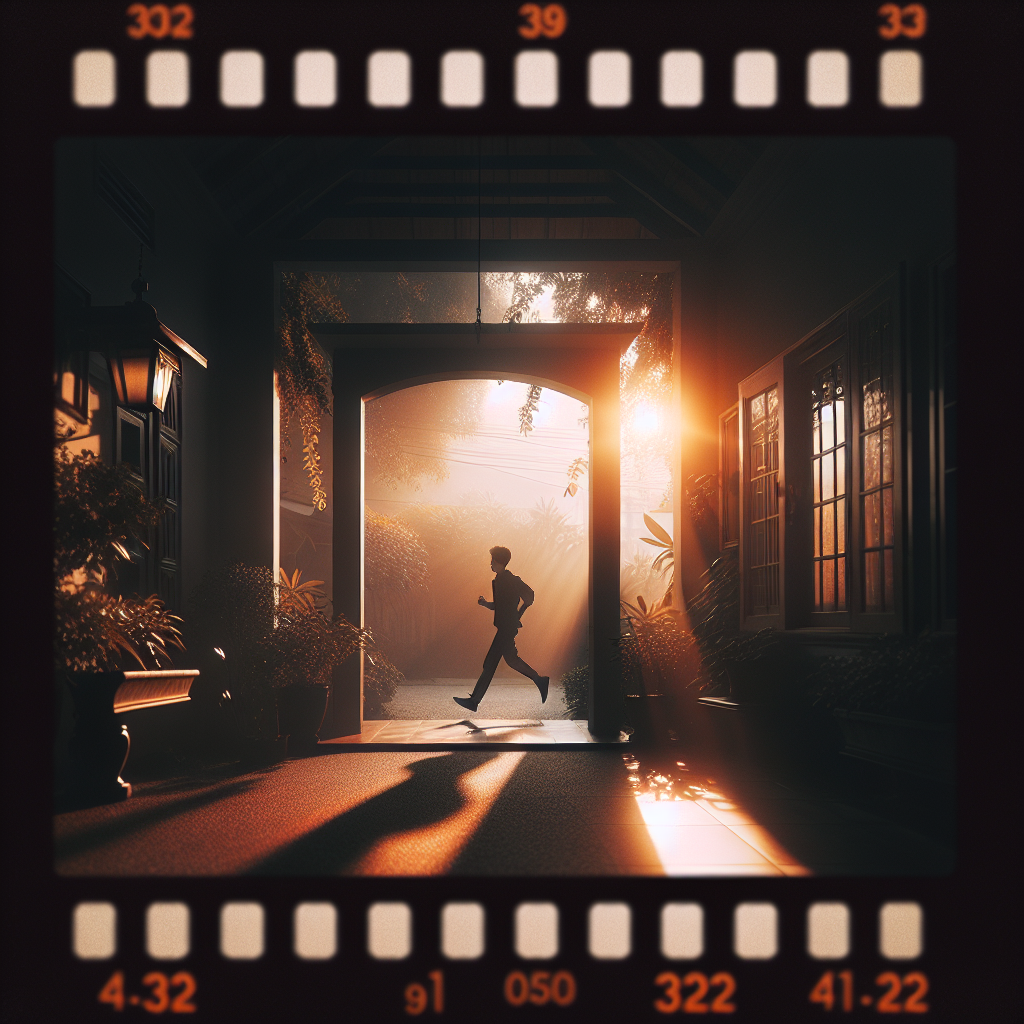
Frame thoughtfully. Use the doorway to create depth: foreground (hallway or threshold), midground (person or object in passage), and background (what lies beyond). The frame-within-frame device is literal here — let the architecture frame your subject without feeling trapped by it. Negative space and leading lines coming from the door trim, steps, or window panes guide the eye. Ask: where should the viewer’s attention land first, and which details should serve as supporting evidence?
Quick composition checklist
When you walk up to a threshold with your camera, run this mental checklist:
- Light source: Is the light coming from inside, outside, above, or behind the subject?
- Edges: Can you use the doorframe, window sill, or stair rail to naturally crop the scene?
- Scale: Is there an object to ground the scene — a coat hook, a mat, a child's shoe?
- Moment: Is there motion (entering, leaving, reaching) that creates implied narrative?
- Background: Does the space beyond the threshold add context or distraction?
Use these questions to make a quick plan: choose one dominant element (light, motion, texture), then compose to support it. If the light is dramatic, simplify the frame. If the action is subtle, add contextual elements to enrich the story.
Light and exposure notes
Thresholds are natural for mixed lighting: interiors vs. exteriors, warm bulbs vs. cool daylight. Learn to decide which side you want to expose for and which to let go. Underexposing the interior slightly can preserve outside highlights and create a silhouette that reads like a character cutout. Exposing for the interior can reveal the details that hint at routine and habit — the crumbs on a counter, the worn arm of a chair.
Practical camera settings for handheld shooting at thresholds:
Lens:35mm or 50mm for context; 85mm or longer to compress and isolate details.Aperture:f/2.8–f/5.6 to control background separation without losing too much context.Shutter:1/125s or faster for walking subjects; 1/60s can work with good stabilization for smaller gestures.ISO:Raise modestly to keep shutter speeds usable; don't be afraid of grain — it feels tactile in domestic scenes.
Metering tip: try spot-metering on the subject you care about, then take a second exposure biased toward the background if you want more detail and merge later or use selective blending in post. If you shoot raw, you’ll have more latitude to rescue highlights or shadows that help clarify story beats.
A small assignment: 30 minutes, five frames
Go find a threshold in your daily life — a front door, a kitchen doorway, a landing, a shop entrance. Spend 30 minutes and make five distinct frames that tell different bits of the same story. Here’s a simple scaffold:
- Establishing shot: wide frame that shows the threshold and its context. Let the architecture breathe.
- Detail shot: a close-up of a defining object (shoe, doormat, keys, chipped paint).
- Action shot: someone entering or exiting, blurred or sharp depending on the motion you want to imply.
- Silhouette or shadow: expose for the brighter side and let the subject fall into shape.
- Aftermath: an empty frame that shows the trace of action — an open door, sunlight on the floor, a moved object.
When you edit, arrange the five images as a mini-sequence. Look for a tonal arc — perhaps dark to light, clutter to simplicity, motion to stillness. Often the most satisfying narratives are not about events but about the change in the scene’s feeling.
Final thought
Threshold photography trains you to prize the in-between. It teaches patience — the quiet expectation before someone appears, or the small evidence left behind after they leave. The more you look for these transitional moments, the more you’ll find that your daily routes are full of micro-stories waiting for a frame.
Try to photograph thresholds like you’re catching a sentence mid-phrase: enough context to make sense, but not so much that the story unravels.
Next time you pass a doorway, slow down for one breath. Notice the little clues. You'll find that ordinary thresholds, when framed with intention, become portals into human stories worth photographing.