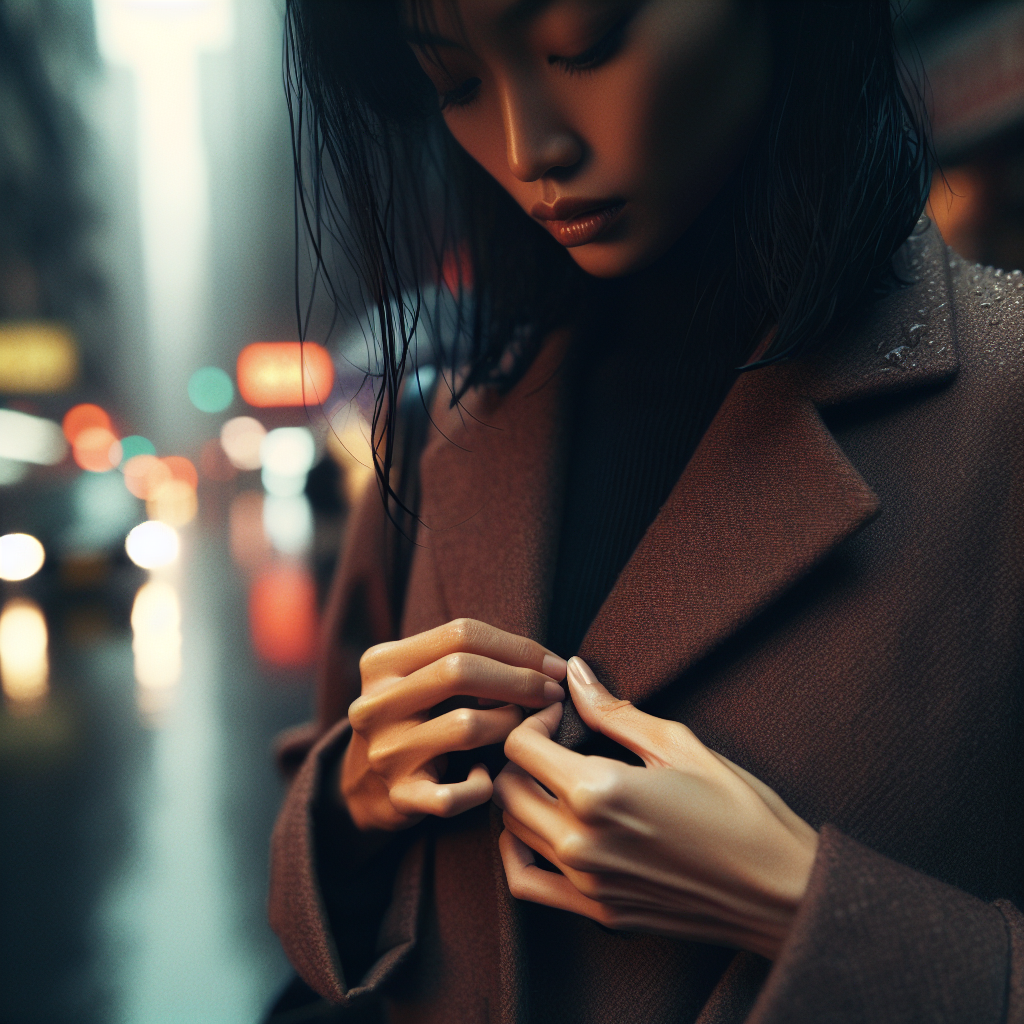
Silent Gestures: Reading Human Presence Without Faces
 Maya Calder
·
Maya Calder
·
Why shoot people without faces?
There’s an interesting freedom in photographing people without showing their faces. The image becomes less about who they are and more about what they do, how they occupy space, and how a moment feels. It invites the viewer to complete the story. For daily photography and visual storytelling, this is a low-key superpower: you can document intimacy without intrusion, suggest narrative without exposition, and often get closer to the truth of a moment.
What counts as a “silent gesture”?
Silent gestures are the small, readable clues that communicate presence: a hand on a railing, the curve of a shoulder, a shoe kicked up against a bench, the way a coat drapes over a chair. These details anchor an image emotionally while keeping identities anonymous. We’re reading posture, rhythm, and context instead of facial expression.
Composition: where to put the gesture
Composing for silent gestures is deliberately reductive. You want the gesture to be readable. That often means choosing a shallow field with a single point of interest or using negative space to highlight an isolated action.
- Frame tight: Crop to hands, elbows, shoes, or the top of a head and shoulders. Tight frames reduce distraction and emphasize the movement or pose.
- Use negative space: Let empty space balance the gesture. A small figure against a large wall magnifies mood.
- Lead with lines: Railings, shadows, roads — use them to point toward the gesture.
Lighting and mood
Light translates texture and shape. In the absence of facial cues, light becomes the emotional voice of the image. Soft side-light accentuates folds in fabric and the tension in a wrist. Harsh backlight turns a hand into a silhouette that reads boldly across a frame.
- Low contrast, soft light = intimate, quiet feeling.
- High contrast or rim light = graphic, a bit more formal or dramatic.
- Flat midday light can be okay when you focus on pattern and geometry rather than tone.
Timing and gesture recognition
Timing is everything. A glance at the right second, a foot just touching the curb, a shoulder mid-turn — these are the decisive moments. Train yourself to anticipate: watch how people move in a place, find the pause points (waiting for the bus, leaning over a table, fumbling with keys), and be ready.
Don’t wait for drama. Quiet, ordinary transitions often contain the most honest gestures.
Camera settings — practical defaults
You don’t need exotic gear to capture convincing silent gestures. Here are practical starting points you can adjust to taste:
- Aperture: f/2.8–f/5.6 for subject separation; stop down for more context.
- Shutter: 1/250s or faster for small movements; 1/60–1/125s for slower, more natural motion with steady hands.
- ISO: Keep it low for clean detail, raise it when you need to maintain shutter speed in low light.
- Focus mode: Single-point AF on the gesture (hand, shoe, etc.), or use continuous AF when subjects are moving unpredictably.
Story-building strategies
Silent gestures work best when they sit inside a clear context. A single hand might be evocative, but a hand holding a paper train ticket, brushed against a timetable, tells a richer story. Think in layers: gesture + object + environment = narrative.
- Repeat and vary: Shoot several gestures that repeat across a scene — multiple hands at a counter, several bags on a bench — then choose the image that best condenses the moment.
- Contrast gestures with surroundings: A brightly colored glove in a monotone scene immediately becomes the subject.
- Sequence for rhythm: A short series of images that track a movement gives a satisfying sense of time.
Ethics and intimacy
One of the advantages of photographing gestures is respect for privacy. You can capture a tender or revealing moment without making someone feel exposed. Still, be mindful: context matters. A cropped hand can be anonymous or it can still identify a person if the surroundings or clothing are unique. When in doubt, step back, anonymize further, or ask permission.
Mini assignments to practice
Try these quick exercises to sharpen your eye:
- Three-gesture walk: Over 30 minutes, shoot exactly three images of different anonymous gestures you see during a walk. No faces allowed.
- Object pair: Photograph a hand interacting with an object (buttoning a coat, adjusting glasses, holding a coffee cup) and make the object tell the story.
- Sequence of four: Capture four frames that show the start, middle, end, and aftermath of a small action (sitting down, packing a bag).
Editing and sequencing
When you edit, look for clarity and resonance. The best silent-gesture photos are legible at a glance and linger when you look closer. In a series, alternate tight and wider frames to give the viewer breathing room. Don’t over-explain; allow the gestures to do the speaking.
Closing thoughts
Silent gestures are a way to respect the world and still tell stories. They help you notice how people inhabit their days — the small comforts, the little irritations, the habits that make a life. Next time you’re out with a camera, slow down and look for the moments that don’t shout. There’s a whole vocabulary in the small things we do that, when photographed with care, speaks louder than a face ever could.