Edge Notes: Letting Marginal Light Tell the Story
 Maya Calder
·
Maya Calder
·
The small bright things that change everything
I have a soft spot for the details that almost don't get noticed: the sliver of late-afternoon sun on a coffee cup rim, a highlight crawling along the edge of a bicycle spoke, a strip of window light that sketches a face. These are what I think of as "edge notes" — tiny bits of light and reflection that provide punctuation in a frame, suggesting shape, space, and mood without shouting.
In this dispatch I'm going through why marginal light matters, how to find it, and a few practical moves you can try with whatever camera or phone is in your pocket. Expect tiny exercises, quick settings, and a couple of visual habits you can build into your daily wandering.
Why edge light changes perception
Light that hugs an edge does three things for an image: it separates subject from background, it reads texture and curvature, and it creates a sense of depth. When the light is thin — a strip rather than a wash — it suggests form economically. Our eyes fill in the rest. That economy is powerful: you communicate a lot without adding more elements.
Edge light rarely demands. It suggests. It whispers shape rather than shouting color.
Where to look and what to shoot
Edge notes hide in everyday places. Start with these familiar spots and let your eye play:
- Near windows: watch for narrow beams or reflections on a table edge.
- Metal and glass: rims catch light and become graphic lines.
- Wet surfaces and puddles: thin gleams map curves and textures.
- People: hair edges, eyelashes, the bridge of a nose often pick up a delicate highlight.
- Kitchenware and tools: the lip of a pan, the apex of a teapot spout, a knife spine.
Simple settings and moves
No special gear required. That said, a lens with decent contrast helps (most smartphone cameras do fine in this regard). Consider these quick adjustments:
- Expose for the highlight if you want a punchy rim — let the highlight cap at specular white to preserve contrast.
- Close down slightly (higher f-number) if you want the rim to be crisp rather than a soft wash.
- Use spot or center-weighted metering where available to keep the camera from trying to average out the thin bright spot.
- Move your camera, not the subject. A fraction of an inch can change where the light falls.
Try this quick code-like cheat sheet when you want a starting point:
ISO 200–800 | f/4–8 (phone: tap to focus) | 1/60–1/500sAdjust ISO and shutter to taste: faster shutter to freeze a tiny glint on moving water, slower shutter to let the sheen breathe if you're handheld with steady light.
Composition shortcuts — use the edge as an arrow
Edge highlights are natural compositional guides. They draw the eye along a curve or toward a subject. Think of them as arrows that are also decorative. Here are a few quick frameworks:
- Parallel lines: a rim highlight that runs parallel to another strong line (table edge, building cornice) amplifies a sense of rhythm.
- Converging guides: multiple edge highlights converging can lead the eye toward a focal point.
- Isolation: a single bright rim on an otherwise dark subject makes that subject feel deliberate and intentional.
Micro-assignments to practice
Spend fifteen minutes on each of these exercises over the next week. Shoot fast and without overthinking.
- Morning cup: Photograph a cup of coffee from above and at 45 degrees, hunting for a thin highlight on the rim. Try both exposed-for-highlight and exposed-for-midtones versions.
- Window strip: Stand near a window with direct light. Find a narrow strip of light on the floor or a chair and make it the dominant element of the frame.
- Metal study: Locate three objects with metallic edges (utensils, rims, bike parts). Shoot them as a trio, emphasizing the light on their edges rather than the objects themselves.
Examples and what to look for
When you review your shots, ask yourself: did the edge note help the viewer understand the subject faster? Did it create separation from the background? Did it suggest texture? If the answers are mostly yes, you've got an image that speaks in fewer words.
Be mindful of overusing edge highlights. Too many competing rims create noise and make the image restless. The best frames usually have one confident edge note that serves as the anchor.
Gear notes (short and optional)
Prime lenses with decent micro-contrast are lovely for this because they render highlights with clarity. On a phone, use portrait or manual mode if available to control exposure and focus. A small reflector (even a white card) can introduce a soft rim where there isn't one naturally.
Ending dispatch — a small scene
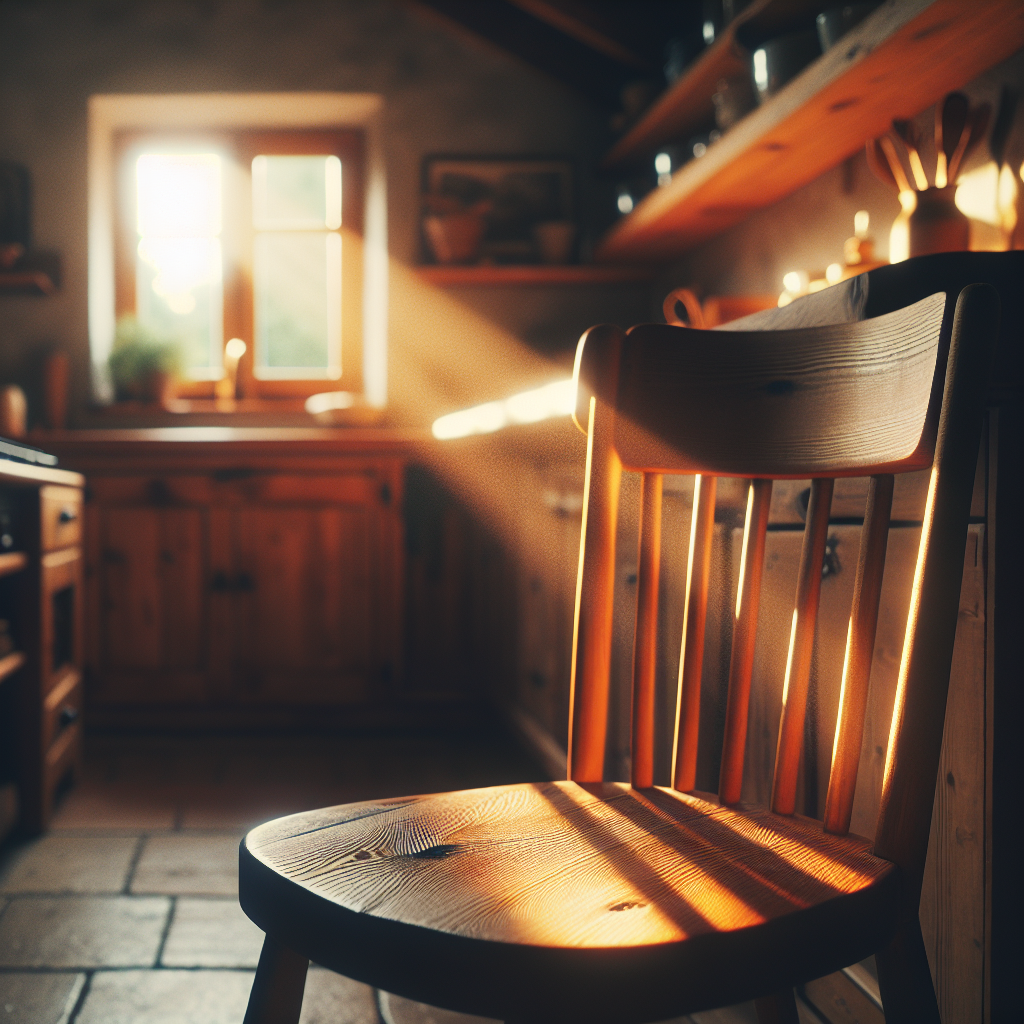
This morning I photographed a worn wooden chair by the kitchen window. The room was otherwise gray, but a thin sliver of sunlight hit the top of the chair rail and turned it into a drawn line. I cropped tight, kept the background soft, and let that sliver be the whole story. People asked about the subject later. It's funny how a single line of light can make an ordinary object feel like a character in a story.
Try to notice those slivers this week. Treat them like tiny cues in a soundtrack: they can turn an ordinary scene into a small, self-contained scene with a beginning, middle, and an implied direction. Take a handful of frames, and let the rim light do most of the talking.