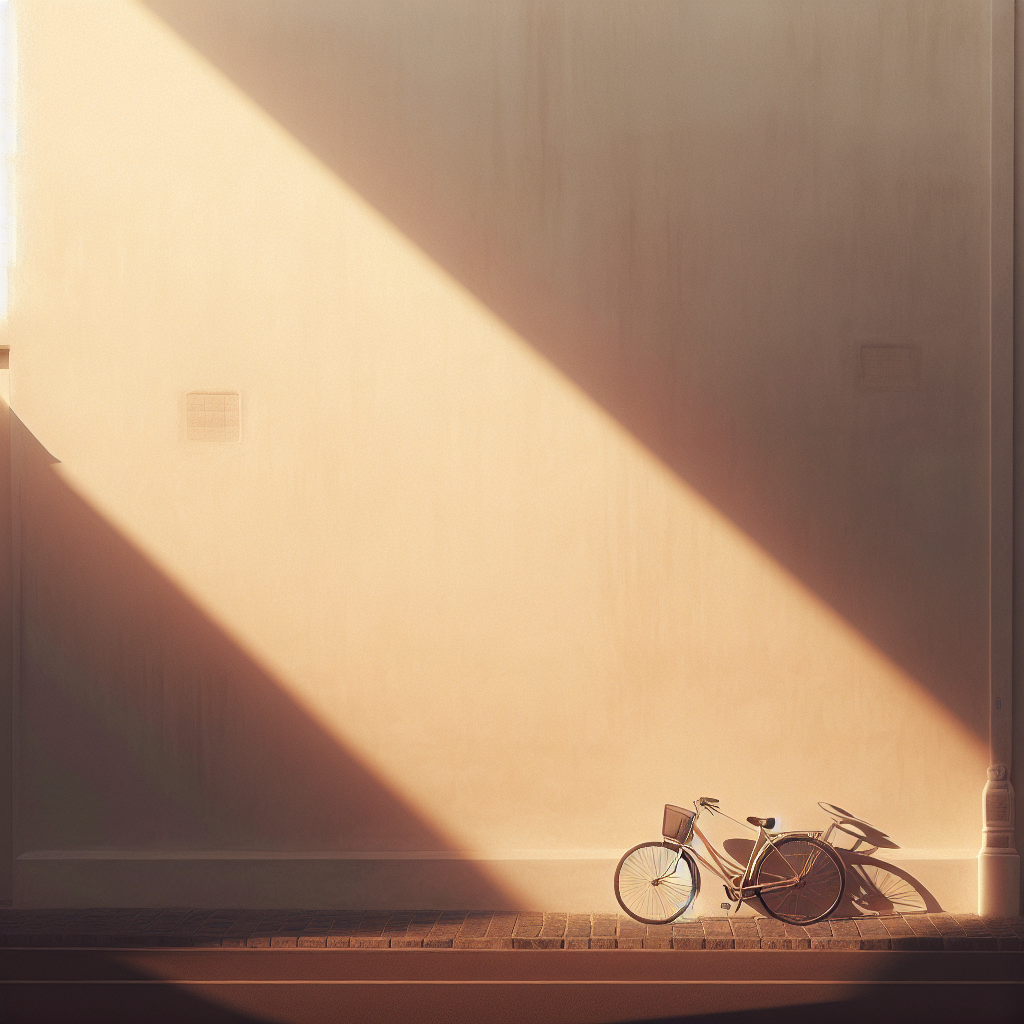
Breathing Room: Using Negative Space to Tell Small, Quiet Stories
 Maya Calder
·
Maya Calder
·
What I mean by negative space
Negative space is not laziness. It’s the thoughtful area around the subject that gives an image room to breathe. Think of it as the silence in a conversation: the pause that gives the next sentence meaning. In photography, that pause can transform a tossed shoe on a doorstep, a single cup on a café table, or a pedestrian caught mid-step into something quieter and more deliberate.
When you remove visual clutter, the elements that remain gain weight. Negative space turns trivial objects into storytellers and invites the viewer to linger, to imagine the moments before and after the frame.
Why it works for everyday photos
Our lives are made of small, repeatable gestures: a hand wiping a counter, a child’s jacket draped over a chair, steam rising from a kettle. Those moments are intimate but often visually noisy. Using negative space is a way to honor the moment’s simplicity. It clarifies what you want the viewer to notice and provides emotional room for interpretation.
Practically, negative space also helps when you’re shooting fast. If the background is calm, your subject reads clearly even at high ISO, from odd angles, or with a small pocket camera. That’s handy when you don’t have time to stage a perfect scene.
A simple three-step practice
- Find a small subject. Look for a single object or figure with clear edges — a hat on a bench, a mug, a bicycle tire. The subject should be interesting on its own or suggest a human presence.
- Create separation. Move so the subject is surrounded by plain tones or textures: a white wall, a clipped hedge, a calm sky. If you can’t move, change your angle or zoom to reduce background detail.
- Give it room. Compose so the subject isn’t centered and not hugging the edge of the frame. Let space lead the eye — toward the subject or away from it. Take two frames: one tighter, one with generous margins. You’ll learn which reads better.
Composition tricks that actually help
Three tools you can reach for immediately:
- Leading negative space: Place the subject at one edge and leave the rest of the frame open. This creates implied movement or an invitation to imagine what’s off-frame.
- Isolated on tone: Use a patch of uniform tone (a wall, a puddle, late-afternoon sky) to silhouette or isolate your subject. Contrast makes the subject pop without adding clutter.
- Scale for context: A small subject in a very large negative space emphasizes loneliness, quiet, or grandeur. Conversely, a generous negative space surrounding a small object can make that object feel precious.
Quick exercises you can do in ten minutes
Practice makes seeing. Try these mini-assignments on your next walk:
- Take five photos of a single bench from different distances and angles, each time increasing the amount of surrounding empty space.
- Photograph three household items — a pair of scissors, a spoon, a plant leaf — against three different backgrounds: textured, plain, and high-contrast. Note which background feels most “quiet.”
- Shoot one human subject moving left to right and then right to left, placing them on opposite sides of the frame. See how the direction influences tension and narrative.
Shooting checklist: keep it in your pocket
When you’re out with a camera or phone, this checklist helps you make decisions fast:
- Subject: Is it distinct enough at a glance?
- Background: Can I simplify it with angle, depth, or aperture?
- Space: Am I giving the subject breathing room or crowding it?
- Leading: Does the empty space direct attention or cause distraction?
- Emotion: What does the space say — calm, loneliness, anticipation?
When negative space can be boring
Negative space is powerful, but like all tools it can be overused. If the empty area is truly empty — no texture, no gradation, no color — the image can feel inert. The trick is to find balance: empty enough to emphasize your subject, but rich enough to be visually interesting. A subtle shadow, a gentle gradient, or a hint of texture can keep the quiet from going flat.
Empty space is not absence; it’s a stage awaiting action.
Small technical notes (practical, not preachy)
Depth of field: A wider aperture helps separate subject from background but also removes context. Use it when you want to isolate. Stopping down (smaller aperture) keeps more context in focus — useful when the negative space has texture you want to keep.
Exposure: Negative space often includes large areas of similar tone. Spot-meter if your camera tends to average to middle gray. Bracketing a frame or nudging exposure compensation by +/−0.7 EV will save you from dull flats.
Orientation: Try both portrait and landscape. Sometimes the story breathes better vertically, especially with human figures; other times the horizontal orientation emphasizes movement or the emptiness around a subject.
A final nudge
Using negative space is less about rules and more about choice. The goal is to let a small thing carry a scene. Start small: make one deliberate image each day that leans into emptiness, not clutter. Over time you’ll notice how restraint can feel more generous than filling every corner with information.
And if you ever catch yourself thinking “Is this too empty?” remember this: emptiness asks a question. It invites the viewer to step a little closer.